If you’ve recently noticed cracks appearing between your tiles, you’re probably wondering what causes grout to crack and whether it’s something you should be worried about. I’m the owner of ProTiling WWC, and cracked grout is one of the most common problems homeowners contact us about across Wales and the West Country.
While grout might seem like a small part of a tiled installation, it plays a vital role in protecting the floor or wall beneath. When cracks appear, they can allow moisture to penetrate, create movement between tiles, and lead to larger problems if left unchecked.
The good news is that understanding what causes grout to crack can help you prevent the issue altogether.
Is Cracked Grout Normal?
Many homeowners assume a little cracking is normal, but that’s not always the case. While buildings naturally move over time, properly installed grout should remain intact for many years.
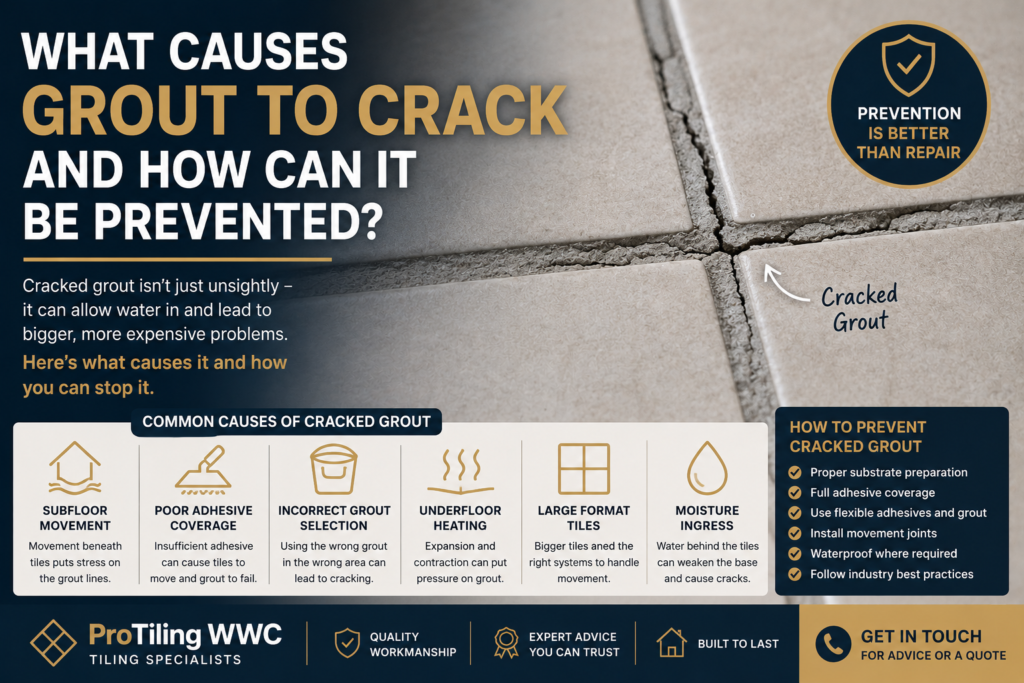
When people ask what causes grout to crack, the answer is usually linked to movement, poor preparation, incorrect materials, or installation issues rather than the grout itself.
Subfloor Movement
One of the biggest reasons people ask what causes grout to crack is movement beneath the tiled surface.
If a timber floor flexes when walked on or a substrate hasn’t been prepared correctly, the movement can transfer directly into the tiles and grout lines. Over time, this stress causes the grout to crack.
That’s why proper substrate preparation is one of the most important parts of any tiling project.
Poor Adhesive Coverage
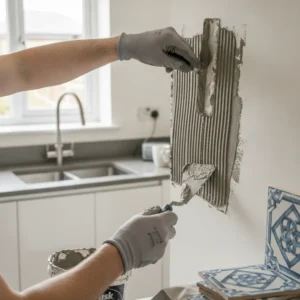
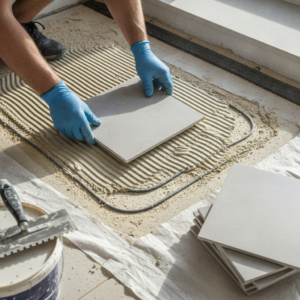
Another common answer to what causes grout to crack is insufficient adhesive beneath the tiles.
If tiles aren’t fully supported, they can move slightly under pressure. Even tiny amounts of movement can eventually lead to cracked grout lines.
This is often linked to hollow sounding tiles. If you’ve noticed unusual sounds beneath your floor, our guide on why do floor tiles sound hollow explains the issue in more detail.
Incorrect Grout Selection
Not all grout products are suitable for every environment. One reason homeowners ask what causes grout to crack is because the wrong grout has been used for the installation.
Areas exposed to temperature changes, moisture, or movement often require flexible grout systems. Standard grout used in demanding environments may crack prematurely.
Choosing the right products from the start makes a huge difference to long-term durability.
Underfloor Heating Expansion and Contraction
Underfloor heating is becoming increasingly popular, but it can also contribute to problems if installed incorrectly.
Many customers researching what causes grout to crack discover that thermal expansion is the culprit. As heated floors warm up and cool down, materials naturally expand and contract.
Without flexible adhesives, movement accommodation, and proper planning, grout can eventually crack.
Our guide to underfloor heating tile compatibility explains how to avoid these issues.
Large Format Tiles and Movement
Modern homes increasingly use large-format porcelain tiles because they create a clean, contemporary appearance. However, these tiles can highlight movement more than smaller formats.
This is another reason homeowners ask what causes grout to crack after a renovation.
To combat this, we often install uncoupling floor systems that help isolate movement and protect the finished tiled surface.
Building Settlement
New-build homes and extensions naturally settle during their early years. This slight movement is often enough to create hairline cracks in grout if appropriate movement joints haven’t been incorporated.
When assessing what causes grout to crack, it’s important to consider the age of the property and whether any structural movement has occurred.
Moisture Problems
Bathrooms, wet rooms, and kitchens are particularly vulnerable to moisture-related issues.
If water reaches the substrate beneath the tiles, materials can expand, weaken, and create movement that eventually causes grout failure.
This is why professional waterproofing is essential. Our article on Bathroom Tiling in Newport explains the importance of waterproof preparation in wet areas.
How Can Grout Cracking Be Prevented?
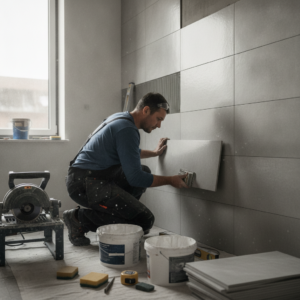
The best way to prevent grout failure is to address the root causes before installation begins.
At ProTiling WWC, we minimise the risk of cracked grout by:
- Preparing substrates correctly
- Using suitable adhesives and grout systems
- Installing uncoupling membranes where required
- Allowing for movement joints
- Following manufacturer guidelines
- Using quality materials throughout
Most grout problems can be prevented with proper planning and professional installation.
When Should You Be Concerned?
If you’re researching what causes grout to crack, it’s worth checking whether the issue is isolated or widespread.
You should seek professional advice if:
- Cracks continue to reappear after repair
- Tiles feel loose or hollow
- Moisture is present behind walls
- Multiple grout lines are affected
- Tiles are beginning to lift
These signs often indicate a deeper issue beneath the surface.
Need Help with Cracked Grout?
If you’re concerned about a tiled floor or wall and want expert advice on what causes grout to crack, I’d be happy to help.
You can contact ProTiling WWC here to discuss your project, arrange an inspection, or request a quotation.
Understanding what causes grout to crack is the first step. Fixing the underlying issue properly is what protects your tiles for years to come.
– From your trusted tiling specialist at ProTiling WWC
Want more from us in your Google results?